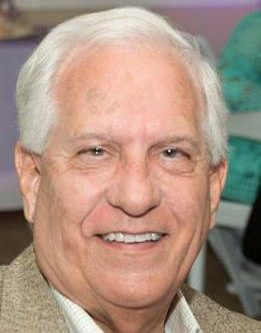
Bob Bentz, born with polycystic kidney disease (PKD), faced a lifetime shaped by inherited kidney failure. After starting hemodialysis in 1994, he received a cadaver kidney transplant in 1995, followed by a bilateral nephrectomy in 1998 due to complications from PKD. Throughout his journey, Bob navigated dialysis, surgery, and long-term treatment while maintaining an active life, supported by his wife, a friend he met through dialysis, and a strong sense of humor. Now more than 30 years post-transplant, he continues to live fully and advocate for others.
Having been born a twin with Polycystic Kidney Disease (PKD), it was predictable that my future would include kidney failure. In 1992 I was 46 years old, and my body was showing the effects of PKD. In 1994, I began hemodialysis. Nine months later in 1995, I received a 25-year-old cadaver kidney.
My maternal grandmother had nine children, eight of nine had PKD. My twin brother and I both had transplants. He passed away of complications in 1990. Some family members ignore the disease, some are changing their diet, some are waiting for a transplant, one has had two transplants, some are on dialysis, one has no interest in a transplant.
Jump forward to 1991, my creatinine levels showed that my kidney function had reached a critical point, and I would soon need dialysis.
Daily “Good Night” Kiss
This probably applies to everyone. My wife Paula and I had discovered a simple habit that has likely played a part in our 52 years of marriage, through both kidney failure and transplant. Regardless of what happened during the day, we always give each other a “Good Night” kiss. In some cases, it was the “White Flag” of surrender or truce; other times, a gentle “Sweet Dreams”. In the morning,we kiss again. Often, this small gesture was our way of saying that we would face the day together, regardless of the challenges ahead.
I traveled for business while on dialysis, scheduling treatments so I could make trips as far as the West Coast and still return in time for my next session.
While on dialysis I sat next to a guy called Ben, who had inherited sickle cell anemia and I have PKD – both genetic conditions. It is amazing how, even in the face of adversity, the journey brings you to some of the best people. We both knew this was something we had to get through. Ben and I made a pact not to let dialysis control our life or our frienship, and we agreed to bring a joke to every dialysis session. Some were silly, but I found myself looking forward to seeing Ben and hearing what he had come up with each time.
One of the biggest challenges I faced was learning not to dwell on what I did not know. When you start assuming answers to unanswered questions, your mind can quickly become your worst enemy.
Eight months after starting dialysis, I received my transplant.
A memorable – and slightly humorous – moment followed. Paula and I arrived at the hospital, parked the car, and checked in what happened next was an emotional moment. A very stern nurse walked into the room. At that point, I thought nothing could bring me down to earth.
| The nurse was carrying a long catheter. | I asked, “What are you going to with that?”. She replied, “This is the last ‘fun part’” before you receive your kidney.” |
I tried to negotiate, but she was an expert, and it was over in no time.
One of my transplant medications was Prednisone, which they started ata high dose. Hard to believe, but I actually felt like going for a jog at 2 AM!
After Kidney Transplant
Neighbors once dropped off a basket full of female products. Apparently, the rumor was that I had received a female kidney. In reality, a transplant has no gender effect. My donor was a 25-year-old male with blond hair and blue eyes.
Upon returning to Baltimore for a follow-up at the clinic, Paula dropped me off in front before parking. A sign on the door said the clinic had moved around the block. As Paula turned into the parking lot, I looked around, navigating the lot on foot. I am sure this must have been quite a sight for any onlookers.
In 1998, because of PKD, I underwent a bi-lateral nephrectomy to remove my native kidneys. During the procedure, my pancreas was accidentally bruised, and I ended up with pancreatitis.
Today – Year 2026, Age 78, 31 Years Post-Transplant, I live in a large retirement community offering numerous activities.
I have had no rejection, just some long-term effects from immunosuppressants.
The journey may be scary at times, but looking back so was my first date, first day of school, and driver’s license test.
Disclaimer: The blog series is intended for informational purposes only and is not meant to endorse or promote any specific drug, product, or brand. Each individual’s experience is unique and should not be construed as medical advice or a guarantee of similar results for others. Always consult a qualified healthcare professional before making any decisions regarding your health and well-being.